Tuesday
Apr022013

an excerpt from "Necessary Wisdom"

The Need for Philosophy

I’m hesitant to advise or promote any particular spiritual or philosophical path. But there are actually two practical methods, which can converge and enhance each other, for anyone who wants to pursue philosophical experience and spiritual development.
The first method is to find a “philosophical friend.” By that I don’t mean a guru, or someone who can teach you about a particular path.  A philosophical friendship is among peers, and it’s rooted in the study of the great unanswerable questions of our existence, the questions of the heart: Why am I here? Does God exist? Why does evil exist? Why do we suffer, and is death the end? What should we do with our lives? The aim is to explore such questions with each other, or perhaps in a small group, in a way that serves to deepen the questions without feeling the need to come up with definite answers. This way we become more visible to those persons who have real knowledge and who are looking for those who need what they have to transmit.

***

The other philosophical directive that I would recommend is the work of listening. It’s quite rare these days to encounter the person who can hear opinions which are contradictory to their own, and receive those opinions in a respectful way, without reacting immediately or, at best, waiting for an opening in which to fire back with one’s own point of view.
A very useful tool is the “mirroring” technique of dialogue, which is usually directed toward solving problems of communication. But if you pursue this kind of communication without trying to fix anything, or heal a relationship, it’s a wonderful exercise in the pure art of listening. When you have to restate another’s point of view, and get that person’s agreement that you have indeed gotten it right before expressing yourself, you are effectively stepping back from your own opinions. There’s a kind of enforced pause from the habit of mostly listening to yourself, which we all have. And you’re also stepping back from the habit of wanting to win arguments, which is also universal. When you can step back in this way, some remarkable and even miraculous things can happen – not just between people, but within one’s own mind.


p. 115-116 from Necessary Wisdom, Jacob Needleman in conversation with D. Patrick Miller.

Saturday
Feb092013

Responding to questions about "An Unknown World"

Jacob Needleman responds to a few questions on his book "An Unknown World"

Q. When we question the meaning of life, you insist that we add the Earth to this query. Why is it important that we do so?

JN. One of the main aims of this book is to see what it means for us that the Earth itself is a living being. Within a living organism everything that exists has a function, a role to play, in the whole of the life of which it is a part. Therefore, the meaning of human life is inseparable from the function that the human species is meant to serve as part of the living Earth. The central question of my book is: What, then, does the Earth really need from us?—far beyond the kind of efforts we are making to fix the environmental crisis  we have created.  Since everything human is part of the Earth, and is meant to play an essential role in the very evolution of the Earth—then everything human, including especially our inner and most inmost life, has an essential function within the life of the planet.

Q. Your book explores humanity’s purpose on Earth—the perennial question that we can never seem able to answer. What is the missing element in our understanding of why humanity is on Earth?    Also, why is this an important question to continue pondering?

JN. What is missing is our understanding of what it is that distinguishes human life from all other life on Earth.  The element that distinguishes a human being from all other creatures is the possibility of awakened consciousness. Therefore, it is awakened consciousness that the Earth uniquely needs from us—far beyond the level of thought, emotion and behavior that characterizes the quality of our present  everyday lives. We are built, constructed, to live at quite another finer, deeper level of conscious experience and action. In this sense, speaking generally, human life, fully human life, has not yet rooted itself on the Earth—except in remarkable men and women throughout history who have tried to help human beings awaken to the level of understanding, compassion and moral power which are properties of awakened consciousness.  

Q. In the search for consciousness, you conclude that the Self (or the soul) isn’t measurable by the science of our era.  What parts of the Self can’t the scientific method account for? Why isn’t science enough?

JN. Consciousness can exist at many levels and each level of consciousness brings with it its own level of knowledge. Our present level of scientific knowledge reflects our present level of consciousness. The more fully awakened human mind would see an entirely different reality, a more unified vision of a more purposeful, living universe. The capacity of a higher, unknown quality of human feeling is an essential element in seeing the whole of reality for what it is. This capacity of feeling is unknown to science and can only be recognized by awakening to it in oneself. Therefore, profound self-knowledge is necessary for deeper understanding of  both the universe and the brain. Scientists who study the brain and the mind sooner or later may realize that new technologies or theories will never of themselves be enough to understand the higher self within the human psyche. To understand awakened consciousness one must oneself begin to awaken to one’s own possibilities of consciousness.  Without that effort, our modern culture will continue to thrust upon us a standard of knowing and a vision of reality which  blind us to our possible role in the cosmic scheme.

Q. Why do you say all of man’s science is a science of the Earth?

JN. Just as there are levels of consciousness and levels of knowledge, so there are also levels of reality. Putting it very simply:—there are levels of reality within any organism: each level serves the purposes of a higher level and is in turn served by the level beneath it. The life of cells serves the needs and purposes of the tissues within which the cells function—in that sense the tissues exist at a higher level of purpose than the cell. This follows the progression: cells—tissues—organs (such as heart, lung, etc.)—system (circulatory, respiratory, etc.) and, finally organism.  In a living, organic universe there are also levels of reality: the purposes of the Earth serve the purposes of the next level— the purposes of the planets in solar system; the planets serve the purposes of the Sun, etc., etc. We can say that modern science never reaches above the level of the Earth because to perceive purpose (and value) one needs the development of feeling; the isolated intellect alone cannot perceive value or purpose in reality—which is why dogmatic scientism (such as that of Richard Dawkins) offers a relativistic view of ethics and values; the part of the mind that is used in scientism is the mechanical, logical part of the mind which is incapable of perceiving purpose in the external world.  Modern science never reaches above the level of the earth because it explains everything it encounters by attempting to see only the mechanical elements in it (the element devoid of mind and purpose). Since it cannot perceive purpose it cannot understand the levels of purpose that are served by the Earth and that are therefore above the level of the Earth. In the human being also there is a level of functioning that is above the level of the Earth—the awakened consciousness (which sees purpose in the objective world) and the awakened conscience (which feels the value and moral element in all of reality.)

Q. You draw on the writings of great philosophers to argue that the Earth is a living being and that there is a correlation between the human soul and the Earth. How did you arrive at this conclusion?

JN. It is a teaching found in many ancient and modern philosophies (Pythagoras, Plato, Hermeticism, Jewish mysticism, William James, to name a few). But mainly, I personally verified key aspects of this idea through what may be called “inner empiricism,” observation of my own mind and body, following the ideas of G.I. Gurdjieff.

Q. You talk about the importance of acknowledging an idea as being part of a whole world of thought. Can you offer us an example of this?

JN.  No great idea exists alone. It is always inextricably bound up with a system of ideas, without which it loses its meaning. Take, for example, the Judaeo-Christian idea of God. To understand this idea, we must understand the Judaeo-Christian ideas about human nature, moral obligation, the nature of emotion, the idea of creation, the role of nature as “the signature” of God, the meaning of love, faith, good and evil, etc. Any one of these ideas, taken alone, runs the danger of being interpreted according to the concepts and notions that happen to be in our own subjective understanding, brought to our own mind by an often disorderly, haphazard accumulation of opinions and points of view alien to the Judaeo-Christian tradition.

Q. What do you hope readers will ultimately take away from your book?

JN. A new sense of hope and responsibility as we realize that what can give our own life its real meaning is also what our threatened Earth deeply needs from us as well.

Wednesday
Dec122012

Music Is Something You Do

I am very glad to present this remarkable recent interview with my wife, Gail, about music--what it is meant to be in our lives and what we are in danger of losing. -Jacob Needleman


Works and Conversations' Richard Whittaker interviews Gail Needleman
Published on April 16 2012

Richard Whittaker:  How did music enter your life? What were the early experiences?
 
Gail Needleman:  I’m told I was always singing when I was a child. My parents told me that that when I was a toddler we would be visiting with friends and my parents would pick me up and stand me on the piano and I would sing for everybody. And when I was very small we drove out to California to see my grandfather who was very seriously ill. They let us in to the intensive care ward to see him and they put me up on the bedside table and I started singing “Jesus Loves Me” to the whole ward. I don’t actually remember any of this, but obviously something was there.
     I do remember standing at the piano when I was five and climbing up on the bench and taking a hymnbook. I couldn’t read music, but I could read.  I would open it up and see the title and then I’d try to play it. When my parents discovered me doing this they decided I better have piano lessons.
 
RW:  Were your parents musical?
 
GN:  My parents both appreciated music, played music, would sing. My father played violin. I remember standing in church singing and hearing the voices of my mother and father. My mother would sing alto and my father would sing bass or sometimes tenor and I’d be singing the melody. My brother is also a musician and he said we didn’t have to learn about harmony because we were immersed in it from childhood. 
    When my brother and sister and I were in elementary school we used to make up our own little arrangements of folk songs. We played the ukulele and would sing three-part harmony.
 
RW:  What church did your family go to?
 
GN:  Baptist.
 
RW:  And you’d sing in the congregation?
 
GN:  Yes. Later I sang in the choir.
 
RW:  I wonder if you have memories of any particularly strong experiences with music when you were younger. I know I have, for instance listening to Ravel’s Bolero on a big old 78rpm record when I was 9 or 10.
 
GN:  We didn’t have a record player until I was in junior high school. My father was in graduate school so we had no money at all. For a while I had one of those tiny record players and I had one record.
 
RW:  What record was it?
 
GN:  It was a Handel trumpet concerto. [laughs] Basically, music was something that you did. And in that sense I think I’m more in the line of the way the world has always been in all cultures at all times. Music is something you do and it’s only very recently that it’s become a passive activity.

Click to read more ...

Tuesday
Dec042012

The Earth is a Sacred Book (an excerpt from An Unknown World)

    Morning. Morning thoughts out from behind the shadows of night.

    How could it have taken so long to see this?

    The Earth is a sacred book. An ancient idea—found almost everywhere in the ancient worlds, from Pharaonic  Egypt to the alchemists and esoteric visionaries of Judaism, Christianity and Islam; to the Taoism of China and the hidden doctrines and practices in the mountains of Tibet and in the surpassingly great culture of India; to the powerful spiritual teachings of tribal cultures throughout the Americas,  Africa, Asia: Nature in all its diversity as the signature of God and, indeed, the “language” of God. A language that has both an inner and an outer meaning, like scripture itself. Like scripture itself, it can be “read” in its outer, literal meaning and at the same time intuited in the many levels of its symbolic, transcendent meaning.  Like scripture itself, like the language of God itself,  nature, the Earth calls man to the heights and depths of uniquely human double perception, inner and outer simultaneously, drawing him outward to expression and engagement in the world at the same time that it calls him upward, inward, toward the silent inner Self or God within.

     For a half century of my life I have been studying and teaching about sacred texts—Bible, Sutra, Upanishads, legend, symbol—at their origin  encoded writings demanding to be understood or “heard” with both the outer and the inner sense of hearing; seen with both the eyes of flesh and the eyes of fire.  To take such texts in their purely literal meaning can be a transforming experience, true, but only, I think, when one is burning in the inner fire of transcendent faith (which is very different from blind belief). Apart from that, such sacred writings call us to the search for an inner state of listening (Christ’s “ears to hear”), --listening, attention that is not only of the mind, but also of the heart. But even then not only of the mind and the heart, but also—and of paramount importance, an importance that has been tragically forgotten in our era—a new attention of and from within the physical body.

    Seen in this light, we can say that science offers us a literal reading of the language of God. It shows us outer nature as nature appears to the outer man; the outer earth as the earth appears to the outward-directed mind, the mind that is dependent on the outward-directed five senses together with the automatisms of mental logic (mathematics) along with the ability to combine sense-based impressions in ever new and original (though not thoroughly true) ways.

     And it is in this light of this uniquely human capacity of double perception that we can glimpse the possibility of both a deeper appreciation and a sharper criticism of the materialism of modern science—a sharp criticism and a deep appreciation of how modern science approaches reality, the universe, our body and our Earth.

    To begin with, we need to make a distinction between science and what is called “scientism.” Science itself is, at its own level, a truly honorable method of investigating nature. It is fundamentally “empirical,” that is, based on actual observation and personal experience, observations and experience that can be tested  and repeated by others under strictly defined external conditions. It brings us remarkable and essential knowledge, but it is knowledge gathered and synthesized by only one of the cognitive powers of the human psyche. Such knowledge may be great and powerful in its rightful domain. But it is not the same thing as understanding in the full sense of the word. And the crisis of our present relationship to the earth is evidence of the danger of knowledge without understanding.

    What we may call “scientism,” appears when scientific knowledge imagines itself to be understanding, and when it presumes to have the authority to dispose of fundamental questions that require a quality of consciousness  that simultaneously embraces the two great directions of perception. Such fundamental questions are sometimes called “unanswerable” : questions of meaning and purpose, the existence of God, good and evil—all of the great questions of the heart that are the main concerns of real philosophy and authentic religion. It may be true that they are unanswerable, but only by one part of the mind alone.    

          Understanding is a capacity of the whole of the human psyche. There are fundamental problems and questions of human life that cannot be resolved by organizing outward perception alone, but which simultaneously and inescapably require the active energy of inner perception.  The question of our relationship to the earth is one of these fundamental questions.   

    We are going to see that the danger of scientism is the same as that of the dogmatically literal-minded reading of scripture.  Just as the error of dogmatically taking sacred texts too literally is that the individual is not aware that he or she is hearing it with only a part of the whole human psyche, so also science becomes scientism not because it relies so much on the senses and mental logic, but because it does not go toward the  world with the fullness of sensing— with the energy of the outward-directed mind blended, but not mixed, with the energy of the inward-directed mind with its unique power of non-egoistic intuition and feeling. The revolution in our understanding of the earth requires that we seek to inhabit the physical with more, not less, of our psyche.

      If the earth is a living being, as it surely is, then, like everything that lives it either growing or dying. But perhaps, in ways that we do not understand, in order to grow, the earth needs  our uniquely human conscious energy.  

          Many ancient writings speak of the earth as an angel. But perhaps the earth is the embryo of an angel, an angel on the way to being born.

   
© 2012 Jacob Needleman

Monday
Nov192012

On Viewing "Lincoln"

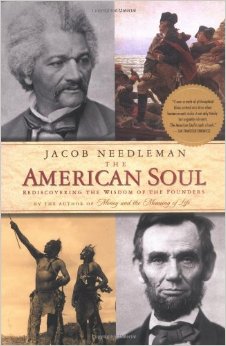
After viewing the film Lincoln this weekend, I am reflecting on the study I'd made of Lincoln when I wrote 'The American Soul' several years ago.  Here is an excerpt. (The full chapter on Lincoln can be read here.) 


from  CHAPTER 5.  

Individuality: A Meditation on The Face of Lincoln

   This face was placed before us when we were very young. We were told he was a great man. We were also told wonderful things about Washington and Jefferson and, in my household, Franklin D. Roosevelt. But only with Lincoln did we actually sense greatness. I was drawn again and again to his face.
We were told about his great deeds—freeing the slaves, holding the nation together. We were given the Gettysburg address to memorize and study. But it was not what he did or said that astonished me. It was what was in his face. ...

… I now have before me a book of Lincoln photographs.  It is not easy to look at them freshly and honestly, so overcrowded with familiar associations is this face. What helps is that this particular collection also contains numerous photographs of Lincoln's family, friends and associates. I remind myself that I am looking for the root meaning of the ideal of individuality that lies at the heart of the American experiment. I know—I sense—that a key to this ideal is in the face of Lincoln. …

… I look now at one of the later photos of Lincoln taken probably around the same time as the photo of Grant. It is April, 1864. The war by now has gone far, far beyond what anyone expected. Far, far more death and horror and danger to the republic. Only Lincoln seems able to contain all the death and anguish of the war, all the demons that have been unleashed. His posture is contained, his body seems to contain all that passes in his inward-directed face and eyes. And I see that it is Lincoln's body that gives his face such force. The face alone, yes, it is strong, perhaps even spiritual; but with the body, the relaxed body (a grown-up's relaxation, not a child's, not an animal's), everything in the face is rendered more objective; the qualities one feels in the face are verified, rendered part of nature, organic.

   Looking at Lincoln in this way, one begins to suspect that over the years the ideal of individuality which we lies at the root of the idea of America has become infantilized. The corruption of individualism we now so often see about us is a species of arrogance that confirms itself by excluding others and begets conflict with others, opposition, and fear. True individuality contains the whole of man—to be truly oneself, to be uniquely oneself is to be I.  ...

… It is important to remember that photographic portraits in that era required that the subject tiresomely sit and wait without moving for long stretches of time. The camera, therefore, does not capture the impression of the moment as it can do today, the fleeting smile or flash in the eyes; the sudden look that sometimes appears for a moment between familiar postures. No, here the camera records what the man or woman has worn all their lives under every other smile or frown. It is said, for example, that Lincoln's good humor and playfulness never appears in his photographs.

   These old photographs can therefore represent for us the individual stripped somewhat to some small degree, of his or her "individuality" in the contemporary sense of the term—the fleeting impulses, the "charm" that one sustains for short moments and in immediate reaction to some stimulus. Of course, a great photographer can see through all that and, in one instant, give us the essential person behind the passing facades. But in these old photographs, time is the photographer. Time always speaks the truth.
And yet, in these photographs, Lincoln appears intensely individual, intensely alive and singular. This face is a face within which we sense the possibility and the right of a man to say I. …

… The face of Lincoln draws us to ponder this meaning of spirituality as the main heritage of American individualism. If Luther's struggle turned into Lutheranism, very well, that is how religions form, and perhaps it is very good. If George Fox's raw experience of God's presence turns into Quakerism, also very good, and in the same sense. If the presence in the person of Socrates becomes Platonism; if the being of the remarkable manual laborer of late antiquity, Ammonius Saccas, becomes eventually the neo-Platonic religion systematized through the writings of his pupil Plotinus; if the Zen Master's pupils create Zen Buddhism; well, it is the way all religions, rituals and forms of human life appear for all the good and bad that these forms support. But at the heart, at the origin of all these religions or schools there is the experience of individual presence—the conscious presence that is as yet uncaptured by forms of thought, language or social organization. That there should exist at the center of the American culture the ideal of such a man, such a human being, is not unusual in the history of nations and cultures. That this man should have been the most politically powerful man in the nation—that is remarkable. The central icon of our culture is a man of individual presence who is also immensely effective and engaged in all the outer forces of life—war, power, money, action, calculation, love and hate, negotiation, compromise—the whole world of the senses and the ego. The most powerful man in the United States and therefore, by then, already one of the most powerful men in the world: that this should have been a man of individual presence—that is remarkable.

I do not know how to measure Lincoln against the figures and legends such as Luther, Socrates, Moses. We can only say, with some degree of certainty, that his face calls us to the whole question of individuality as a conscious presence that transcends the ordinary meanings of the word "individualism."

It has become fashionable to criticize American individualism as narcissistic in relation to the social demand to act for the common good. There is the materialistic narcissism of consumerism; there is the psychological narcissism of New Age self-development; there is the narcissism of political and social apathy. Against such "narcissism" is placed the duty to participate in the governance and needs of the community. The figure of Abraham Lincoln entirely eclipses this familiar dichotomy between individualism and social responsibility. It does so, in part, by making us question our individual consciousness in the very social actions we feel obliged to perform. Of what real value are actions undertaken blindly and imitatively? Or, worse, violently, self-righteously, perversely, hypocritically? Yet act we must, now and here in just this world and at just this time. The face of Lincoln is not the face of a solitary or a recluse. Or should we say that yes, it is the face of a solitary who in his time was, paradoxically, perhaps the world's greatest and chief agent of action. ...


© 2002 Jacob Needleman